

Best residency options: which country fits your lifestyle and goals?
Nomad, founder, retiree or family office? Compare taxes, visas and daily life in Europe’s and the Gulf’s favourite bases – and find your match.

Country guides
Compare
 1 minuteNot sure where to start?Seven questions, a ranked shortlist with the reasons.Start the Finder
What do you want to do?
How we work
 90 min · €1,490 · creditedGet an expert opinion.Your situation, your roadmap – checked by nerds who’ve done it.Book a strategy session
Free, no sign-up
 $ nerdy calcProfit in, taxes out.Every country, one slider, zero spreadsheets.Open the calculator
Guides
More nerd stuff
Latest insightBest residency options: which country fits your lifestyle and goals?11 min readRead it
Country guide 🇬🇪
Small country, big toolbox: a 1% turnover tax for individual entrepreneurs, Estonian-style corporate tax and territorial taxation for individuals. Cheap, fast and friendly – as long as you really live there.
Citizens of the EU, UK, US, Canada, Australia and a number of other countries can stay up to one year without a visa. Since 2026, travel health insurance is required on entry.
You become tax resident after 183 days of presence in any continuous 12-month period ending in the tax year. Foreign-source income stays untaxed.
Owning Georgian real estate above a set value qualifies for a temporary residence permit. The threshold was raised in 2026 – check the current amount.
An investment of USD 300,000 or more can lead to a five-year residence permit and later permanent residence, subject to conditions.
Georgia – the country in the Caucasus, not the US state with the peaches – has become a favourite of freelancers, remote founders and perpetual travellers. The reasons fit on a napkin: 1% tax on turnover for qualifying individual entrepreneurs, 0% corporate tax while profits stay in the company, and no tax on foreign-source income for individuals.
Add a year of visa-free stay for many passports, cheap living and excellent food, and the napkin gets crowded. It also has a back side: Georgia is not in the EU, banks have tightened up, and the political direction has been bumpy since 2024.
This guide covers how the system works as of 2026, what it costs, and who it really suits.
Georgia has a simple, low-rate system with a few special regimes on top. The headline numbers:
| Tax | Rate | Note |
|---|---|---|
| Personal income tax | 20% | Flat, on Georgian-source income only |
| Small business status (individual entrepreneurs) | 1% of turnover | Up to GEL 500,000 a year; 3% on turnover above that |
| Micro business status | 0% | Turnover up to GEL 30,000 and no employees |
| Corporate income tax | 15% | Only on distributed profits (Estonian model); 20% for banks and lenders |
| Dividend withholding tax | 5% | 15% to blacklisted jurisdictions; treaties can reduce it |
| VAT | 18% | Registration once taxable turnover crosses the threshold |
Georgian tax residents are taxed on Georgian-source income. Income without a Georgian source is exempt. That is the feature that puts Georgia on so many shortlists: dividends from a foreign company, foreign interest or foreign rental income are not taxed in Georgia just because you live there.
“Georgian source” is the key phrase. Work you perform physically in Georgia, or income paid by a Georgian entity, is generally Georgian-source. So a remote consultant sitting in Tbilisi and invoicing foreign clients has Georgian-source service income – which is exactly where the individual entrepreneur regime comes in.
An individual entrepreneur (IE) is not a company. It is you, registered as a business person with the Revenue Service. With small business status on top, you pay:
There are no deductions – 1% of what comes in, full stop. For a service business with low costs, that is about as simple and cheap as it gets anywhere.
Some activities are excluded, for example certain licensed professions, consulting in regulated areas and activities that require a permit. IT, marketing, design, e-commerce and similar services are the classic users. Check your specific activity code before you plan around the 1%.
Since 2026, small business status takes effect from the date you apply rather than the following month – a small but welcome fix.
Georgian companies (typically an LLC) have used the Estonian model since 2017. The company pays no tax on profits it keeps and reinvests. Tax of 15% applies when profits are distributed – and also on deemed distributions such as non-business expenses, gifts and certain transactions with related parties.
On top of that, dividends paid to individuals are subject to 5% withholding tax. So a fully distributed profit ends up at roughly 19% combined (15% at company level, then 5% on what is paid out). Several of Georgia’s tax treaties reduce the dividend withholding tax further.
Two further statuses are worth knowing:
Both are specialist tools. For a solo freelancer, the IE with small business status is usually the better fit.
Registration happens at the Public Service Hall and is typically done within a day or two. You need your passport, a Georgian address (a registered address service is fine) and, in practice, a local bank account. After registration, you apply for small business status online through the Revenue Service portal.
Running costs are low: a local accountant for monthly declarations typically costs a small, fixed monthly fee. Registration can be done through a power of attorney, but you’ll usually want to be in Georgia for the bank account.
An LLC is also registered at the Public Service Hall, usually within days. There is no meaningful minimum share capital. You need a legal address, a director (who can be a foreigner) and articles of association. Registration can be handled remotely with a power of attorney.
Rough costs for a simple LLC: a few hundred to about two thousand euros for setup including a registered address and assistance, plus ongoing accounting. Exact figures depend on the provider and on whether you register for VAT.
VAT is 18%. Registration becomes mandatory once your taxable turnover in Georgia passes the threshold (GEL 100,000 over a continuous 12-month period at the time of writing). Services supplied to foreign customers are often not subject to Georgian VAT, depending on the place of supply rules – worth a quick check with an accountant.
Citizens of the EU, the UK, the US, Canada, Australia and a number of other countries can enter Georgia visa-free and stay for up to one year. That makes Georgia one of the easiest places to simply show up and stay. Since 1 January 2026, visitors need travel health insurance valid for their stay.
Visa-free stay is not a residence permit. It is, however, enough to become tax resident – which is decided by days, not by paperwork.
You become a Georgian tax resident if you are physically present in Georgia for 183 days or more in any continuous 12-month period ending in the tax year. Days are counted per tax period, and there is no minimum income or special application.
Being Georgian tax resident on paper is one thing. Convincing your old country that you have left is another – you need to break residency there according to its rules. Our day tracker helps you keep count.
If you want more than visa-free stay, Georgia offers several permit types, including:
TBC Bank and Bank of Georgia are the two big names, and both offer modern online banking and multi-currency accounts. Opening an account used to be a walk-in affair for almost anyone. That has changed: banks now ask detailed questions about your source of funds and business, and some nationalities face extra hurdles or refusals.
In practice, being in Georgia in person helps a lot, as does a clear story: registered IE or company, clients, invoices, and a local address. Georgian banks participate in the automatic exchange of financial account information, so don’t treat a Georgian account as invisible – it isn’t, and it shouldn’t need to be.
Compare Georgia with other options in the country comparison or start with the jurisdiction finder.
Rates and rules in this guide were checked in September 2026. This is general information, not tax or legal advice – get your setup reviewed by a qualified advisor before you act.
Numbers last checked: September 2026. Tax law changes – confirm with a licensed advisor before acting. Nothing here is tax or legal advice.
More country guides?
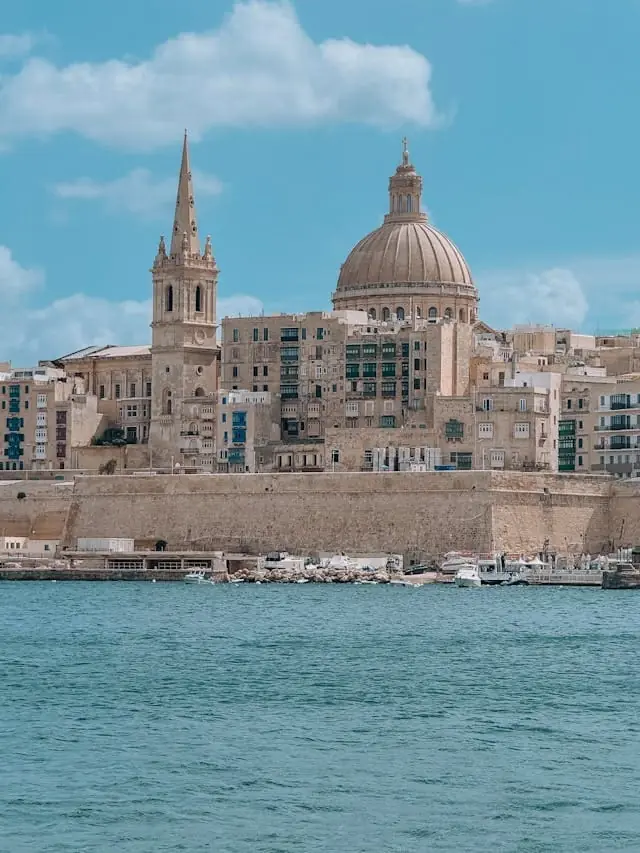 Malta
EU, English, sunshine – and a 5% effective corporate rate for foreign shareholders.
EUEasy residency
Malta
EU, English, sunshine – and a 5% effective corporate rate for foreign shareholders.
EUEasy residency
 Cyprus
15% corporate tax, a generous non-dom regime and an EU address in the sun.
EURemote setupEasy residency
Cyprus
15% corporate tax, a generous non-dom regime and an EU address in the sun.
EURemote setupEasy residency
 Dubai (UAE)
No personal income tax, 0–9% corporate tax and a residence visa that comes with your company.
0% income taxRemote setupEasy residency
Dubai (UAE)
No personal income tax, 0–9% corporate tax and a residence visa that comes with your company.
0% income taxRemote setupEasy residency
 Delaware (USA)
A US LLC you can form from your sofa – tax-transparent for non-resident owners.
0% retainedRemote setup
Delaware (USA)
A US LLC you can form from your sofa – tax-transparent for non-resident owners.
0% retainedRemote setup
 Estonia
0% tax on retained profits, e-Residency and a company you run from your laptop.
EU0% retainedRemote setup
Estonia
0% tax on retained profits, e-Residency and a company you run from your laptop.
EU0% retainedRemote setup
 Liechtenstein
12.5% flat corporate tax, Swiss franc stability and centuries of private-wealth know-how.
Liechtenstein
12.5% flat corporate tax, Swiss franc stability and centuries of private-wealth know-how.
 Portugal
Quality of life, nomad-friendly visas and a special regime for skilled newcomers.
EUEasy residency
Portugal
Quality of life, nomad-friendly visas and a special regime for skilled newcomers.
EUEasy residency
 Romania
1% turnover tax for micro-companies, 10% flat income tax and low living costs – inside the EU.
EU
Paraguay
Territorial taxes, 10% rates and one of the easiest residence permits in the Americas.
Easy residency
United Kingdom
The bank-friendly Ltd and the transparent LLP – formed online in a day, trusted almost everywhere.
Remote setup
Switzerland
26 cantons, 26 tax systems – and some of the lowest corporate rates in Western Europe.
Spain
Sun, a digital nomad visa and the Beckham law: 24% flat for six years if you qualify.
EU
Italy
A fixed annual tax on all foreign income, 7% for pensioners in the south – and la dolce vita.
EU
Bulgaria
10% corporate tax, 10% income tax, 5% on dividends – inside the EU, Schengen and, since 2026, the eurozone.
EU
Romania
1% turnover tax for micro-companies, 10% flat income tax and low living costs – inside the EU.
EU
Paraguay
Territorial taxes, 10% rates and one of the easiest residence permits in the Americas.
Easy residency
United Kingdom
The bank-friendly Ltd and the transparent LLP – formed online in a day, trusted almost everywhere.
Remote setup
Switzerland
26 cantons, 26 tax systems – and some of the lowest corporate rates in Western Europe.
Spain
Sun, a digital nomad visa and the Beckham law: 24% flat for six years if you qualify.
EU
Italy
A fixed annual tax on all foreign income, 7% for pensioners in the south – and la dolce vita.
EU
Bulgaria
10% corporate tax, 10% income tax, 5% on dividends – inside the EU, Schengen and, since 2026, the eurozone.
EU
Nerdy insights
Nomad, founder, retiree or family office? Compare taxes, visas and daily life in Europe’s and the Gulf’s favourite bases – and find your match.
Switzerland, Malta, Estonia, Cyprus, Romania and friends: where your company and your wealth grow best in Europe – with 2026 numbers, legally.

EU lists, FATF lists, OECD ratings: what they mean, why banks care and how to pick a jurisdiction that won’t get your payments frozen.
Free quote · non-binding
Already know what you want to set up? Tell us and we’ll send you one fixed quote from a vetted, licensed partner in the right jurisdiction. Not sure yet? Book a strategy session first – it’s credited if you go ahead.
Popular
↑↓ select↵ open/ or ⌘K searchT theme