

Best residency countries 2026: pick by profile, not by brochure
Nomad, founder, retiree or wealthy family? Taxes, visas and daily life in Europe’s and the Gulf’s favourite bases compared – find your match.

Country guides
Compare
 1 minuteNot sure where to start?Seven questions, a ranked shortlist with the reasons.Find your country
What do you want to do?
How we work
 90 min · €1,490 · creditedGet an expert opinion.Your situation, your roadmap – checked by nerds who’ve done it.Get your roadmap
Free, no sign-up
 $ nerdy calcProfit in, taxes out.Every country, one slider, zero spreadsheets.Open the calculator
Guides
Structures & passports
More nerd stuff
 Latest insightFrance is running out of other people’s money, and the euro makes it your problem19 min readRead it
Nerdy.Money
 Since 2013Nerdy, not shady.Meet the people behind the guides – and the principles we don’t bend.About us
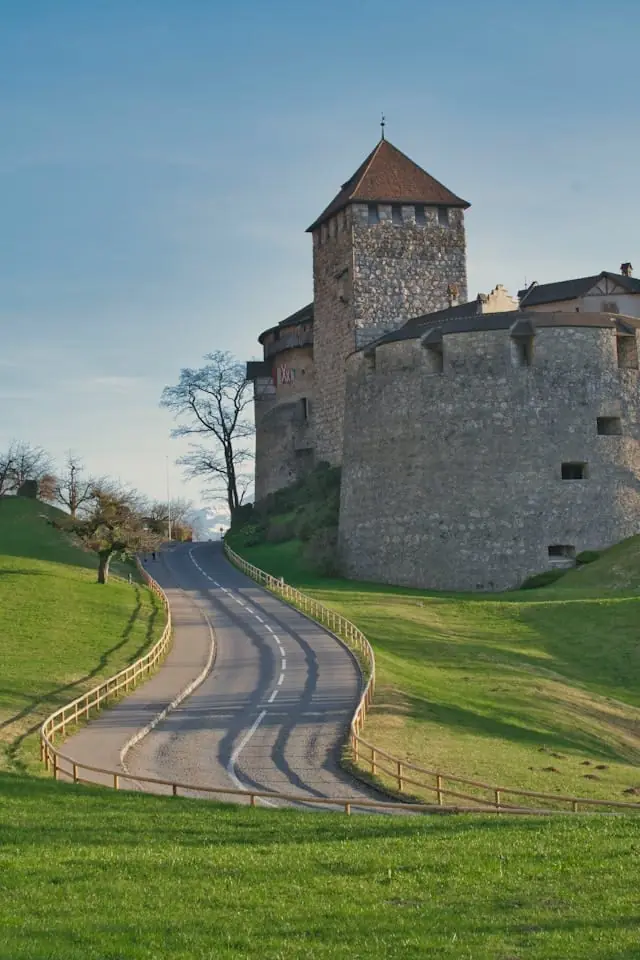
Liechtenstein is a wealth-structuring location first: flat 12.5% profit tax, no withholding tax on dividends, an EEA address and foundations that only pay the CHF 1,800 minimum tax as private asset structures. Living there is another story – residence permits are rationed, partly by lottery. A very good safe, not a new home.
Our verdict
Great if you have serious family wealth to hold, protect and pass on, or an EEA-facing business with real substance in the Rhine valley. Skip it if you hoped to move there: without an EEA passport and a lucky draw (or a job as a key manager) you won’t get a permit, and a small trading company is cheaper and less fussy elsewhere.
15 criteria, each scored 0–10 by a published formula or rubric. Pick who you are – the index re-weights what matters for you.
CompanyResidence
Corporate tax plus dividend withholding on €100,000 profit paid out to a non-resident owner. Transparent entities (US LLC) pay nothing at company level – the owner pays at home, so they get a neutral 5.
Tax while profits stay in the company (Estonia and Georgia: 0%).
Typical yearly cost to keep a small trading company compliant: registered office, accounting, tax filings, audit if mandatory, government fees. Excludes local staff and office rent.
Context: Our estimate from trustee price ranges: the legally required qualified board member (Art. 180a PGR), registered office, bookkeeping and tax return typically add up to around CHF 8,000–12,000 a year for a small AG, roughly the same in euros. The CHF 1,800 minimum tax is credited against profit tax.
Typical working days from signed documents to a registered company. +1 point (max 10) if it can be done fully remotely.
Context: A Liechtenstein trustee prepares the articles, the capital is paid into a local bank and the Office of Justice registers the company – about two weeks once due diligence is done.
How easy it is for a foreign-owned company to open and keep a business account (local bank or regulated EMI) that works for international payments.
Our assessment: Liechtenstein banks (LGT, LLB, VP Bank and smaller houses) are private banks built for wealth: onboarding is thorough, in person or via your trustee, and they’re picky about small operating companies. Foundations with a trustee are routine; a one-person trading company is not.
Number of double tax treaties in force, minus penalties for blacklists that make banks and tax offices nervous: EU list of non-cooperative jurisdictions (Annex I), EU watchlist (Annex II), FATF grey list.
Context: Comprehensive income tax treaties in effect with 23 jurisdictions, including Germany, Austria, Switzerland, the UK and the UAE; Latvia and Montenegro apply from 1 January 2027. Not on the EU lists (February 2026) or the FATF grey list (June 2026).
How much real presence (director, office, staff, board meetings) the company needs locally to be respected as tax resident there and to keep the bank happy. Higher score = lighter burden.
Our assessment: Companies need a qualified board member licensed in Liechtenstein (Art. 180a PGR), which covers holdings and foundations. An operating company that wants treaty benefits and to satisfy the owner’s home tax office needs real local management and premises.
Effective tax a newly arrived resident pays on €100,000 of income from their own (foreign or local) company, using the best regime realistically available to an entrepreneur (non-dom, flat tax, territorial, special regime). Social security excluded.
Context: Dividends from your own Liechtenstein company are tax-exempt for a resident individual (anti-abuse rules apply to low-taxed passive foreign companies). Instead, net wealth – including the shares – is taxed as a 4% notional return at 2.5–22.4%. Salary would be taxed normally.
How realistic it is for a non-EU entrepreneur to get a residence permit that also gives tax residency: requirements, cost, time, approval odds. EU citizens usually have it easier – noted in the reason.
Our assessment: Non-EEA nationals have no right to a permit and only get one as key staff of a Liechtenstein employer. Even EEA citizens depend on a small quota, half of it drawn by lot.
Days per year you need to spend there to keep your permit and your tax residency (whichever is stricter, using the most flexible programme).
Context: No fixed day count, but a permit is granted for actually living in Liechtenstein and tax residence follows your home. Treat it like Switzerland: you live there most of the year.
Numbeo Cost of Living Index (excl. rent, New York = 100) for the city most expats choose.
Context: Numbeo has no data for Vaduz. We use St. Gallen, the nearest Swiss city with data – Liechtenstein prices are at Swiss level, so if anything this is optimistic.
Numbeo Safety Index for the same city (0–100, higher is safer).
Context: Numbeo has no safety data for Vaduz; St. Gallen scores 77.6. Liechtenstein itself has very low crime.
World Bank Worldwide Governance Indicators, Rule of Law percentile rank (0–100). Measures how predictable courts, contracts and property rights are.
Context: Rule of law estimate for 2025 (WGI 2025 revision) ranks Liechtenstein above about 98% of the 215 economies covered – based on fewer data sources than for larger countries.
EF English Proficiency Index score. Countries where English is an official or everyday business language count as 700.
Context: Liechtenstein isn’t covered by EF EPI; we use Switzerland’s score. Finance professionals speak excellent English, but the administration, courts and daily life run in German.
What the residence gives you beyond the country: Schengen/EU access, permanent residence and citizenship path, passport strength of a future citizenship, dual citizenship allowed.
Our assessment: Schengen and EEA access, but citizenship needs 10 years plus a municipal vote (or 30 years) and you must give up your old passport. Most people never get past the permit.
Numbers checked October 2026. Click any row for the formula, our reasoning and the source. How the Nerdy Index works
At least 56 permits for gainful activity and 16 without gainful activity a year. Half are allocated by public draw (28 work, 8 non-work; CHF 100 for the preliminary, CHF 500 for the final draw), the rest by the government. For the work category you need a job in Liechtenstein.
Separate, smaller contingent (at least 12 work and 5 non-work permits a year), decided by the government – no draw.
No legal right to a permit. In practice limited to qualified managers and specialists that a Liechtenstein employer can’t find in the EEA or Switzerland, reviewed over about three months.
The realistic route for most people who work in Liechtenstein: live in Switzerland (e.g. St. Gallen Rhine valley) or Austria (Vorarlberg) and commute. A large share of Liechtenstein’s workforce does exactly that.
Liechtenstein is 160 square kilometres of Alpine valley with a flat 12.5% profit tax, no withholding tax on dividends, the Swiss franc in your wallet and EEA membership in your pocket. It’s also one of the most rationed places to live in Europe. Residence permits come by quota, and half of the EEA quota is drawn by lot. Yes, a lottery. For the right to pay low taxes.
That tells you what Liechtenstein is for. It’s a place to structure and hold wealth – foundations, trusts, holdings, family offices – not a place most founders can move to. Think of it as a well-run safe, not a new home. Here’s the picture as of September 2026.
It fits if you have meaningful family wealth to protect and pass on, want an EEA-based foundation or holding with a hard currency and top-tier courts, and work with a Liechtenstein trustee who knows your home country’s rules. It also fits operating businesses with real presence in the Rhine valley – and the thousands of people who live in Switzerland or Austria and commute to Vaduz every day, because that’s easier than winning a permit.
It’s the wrong choice if you’re a solo founder looking for a cheap low-tax company (a licensed local board member and CHF 50,000 capital for an AG are just the entry ticket), or if the plan depends on moving there. Without an EEA passport and luck in the draw – or a job as a key manager – you won’t get a permit. Charm doesn’t count, and neither does your net worth.
And if you still live in Germany or Austria: a Liechtenstein company doesn’t change where you pay tax. Your tax office knows where Vaduz is. At 12.5%, it sits below Germany’s 15% low-tax threshold for CFC rules – more on that under the catches.
Weighing it against Switzerland? Our Switzerland guide covers the neighbour that lets people in. For a broader shortlist, try the Jurisdiction Finder.
Every legal entity needs local qualified management: companies without a local business licence must have a board member who is a licensed Liechtenstein trustee (Art. 180a PGR); trading businesses need a manager who meets the local licence requirements. A trustee handles formation, and the Office of Justice registers the company – about two weeks once due diligence is complete. Due diligence is the slow part; they will want to know where every franc came from, and they will read the answers.
One rate, no brackets, no municipal trade-tax puzzle: the profit tax is a flat 12.5% on net profit, for companies, Anstalten and foundations alike. There’s a minimum tax of CHF 1,800 a year, credited against the profit tax – and waived if total assets stayed below CHF 500,000 in the previous three years. Dividends received and capital gains on shareholdings are generally exempt at company level.
Entities that don’t carry out any business activity and only manage private assets can apply for private asset structure (PVS) status. They then pay only the CHF 1,800 minimum tax, whatever their investment income. That’s the part of Liechtenstein the brochures don’t shout about, and the part that matters most.
There’s no withholding tax on dividends. Liechtenstein implemented the 15% global minimum tax (QDMTT and IIR), which only affects groups with €750 million+ turnover.
| Step | Owner lives in Liechtenstein | Owner lives in the UAE | Owner lives in Germany (company really managed in Liechtenstein) |
|---|---|---|---|
| Profit | €100,000 | €100,000 | €100,000 |
| Profit tax 12.5% | −€12,500 | −€12,500 | −€12,500 |
| Dividend (0% WHT) | €87,500 | €87,500 | €87,500 |
| Personal tax on the dividend | €0 (exempt; wealth taxed separately) | €0 | ≈ −€23,100 (26.375% flat tax incl. solidarity surcharge) |
| In your pocket | €87,500 | €87,500 | ≈ €64,400 |
The German column assumes an active trading business really run from Vaduz. If the income is passive (interest, licences, many intra-group services), Germany’s CFC rules can tax it in your hands immediately, dividend or not.
Expect roughly CHF 8,000–12,000 a year for a small AG: the trustee on the board, registered office, bookkeeping and tax return. Foundations cost similar or more, depending on the trustee and assets. Nobody here competes on price.
Liechtenstein’s banks – LGT, LLB, VP Bank and a handful of smaller houses – are private banks built for wealth. A foundation with a trustee and investable assets is routine. A one-person trading company with a few thousand in turnover gets the polite smile and a long wait. Plan banking together with the trustee before you incorporate.
Substance matters twice: to be respected as a Liechtenstein company (treaty access, bank comfort) and, more importantly, to stay out of your home country’s reach. A board meeting in Vaduz once a year, followed by a nice lunch, won’t outweigh daily decisions from your kitchen in Stuttgart – see place of management.
Citizenship is for the patient: 10 years of residence plus a municipal vote, or 30 years for the facilitated route – and you normally have to give up your old passport.
If you do get in, the tax system is almost polite. Income tax is 1–8% at national level plus a municipal surcharge of 150–180%, so 2.5–22.4% combined (PwC). Dividends and capital gains on shares are tax-exempt for residents, with anti-abuse rules for low-taxed passive foreign companies. Instead, net wealth is taxed through a 4% notional return added to your income. Example: CHF 2 million net wealth adds CHF 80,000 of notional income. Lump-sum taxation exists for wealthy newcomers who don’t work in Liechtenstein – it still needs a permit, which is the bottleneck.
Vaduz has about 6,000 inhabitants, so life happens across the whole valley and over the Swiss and Austrian borders. Numbeo has no data for Vaduz; nearby St. Gallen sits at 105.7 (excluding rent) with a safety index of 77.6, and prices in Liechtenstein are at Swiss level. It’s safe, green and very quiet. Nightlife is a strong word here. The administration runs in German; bankers and trustees speak excellent English. Zurich airport is about 90 minutes away.
The whole “move to Liechtenstein” plan fails at the quota for most people. Plan with Switzerland or Austria as your home instead – and their tax rules.
12.5% is below Germany’s 15% low-tax threshold. Passive income of a Liechtenstein company you control can be taxed in Germany immediately – see CFC rules.
Germany (§ 15 AStG) and Austria can attribute a foundation’s income to the founder or beneficiaries. The EEA exception needs assets that are legally and actually out of your control.
A company run from your home office is taxed where you sit.
Only 23 income tax treaties – fine for Germany, Austria, Switzerland and the UK, thin elsewhere.
CRS, a beneficial ownership register and automatic exchange mean nothing here is secret. That’s a feature, not a bug. Liechtenstein sells legal certainty now, not discretion.
Asset protection and succession (foundation or trust) or an operating business (AG or Anstalt)? The answer decides everything else, including whether Liechtenstein is the right place at all.
CFC rules, foundation attribution, exit tax and gift tax on contributions – get this reviewed before anything is signed.
They sit on the board or council, handle due diligence and deal with the Office of Justice and the tax administration.
Articles or foundation deed, capital (CHF 30,000–50,000), registration – about two weeks.
Open the account with a Liechtenstein or Swiss bank; apply for private asset structure status if the entity only manages assets.
Annual accounts, tax return, beneficial ownership register, CRS – and real decisions taken where the structure says they are.
No. A company gives you no right to a permit, however big the share capital. EEA citizens can enter the draw; everyone else needs a job as key staff.
No. It’s a legal tool for asset protection and succession, fully transparent to tax authorities. How it’s taxed depends mostly on where the founder and beneficiaries live.
Liechtenstein for wealth structures and EEA access, Switzerland for actually moving there and running a company. Many families use both: live in Switzerland, hold assets in Liechtenstein.
Setup and yearly fees depend on the trustee and the assets. Budget for professional fees plus the CHF 1,800 minimum tax – it makes sense for substantial wealth, not for small sums.
Planning a family structure? Our protect wealth page covers the bigger picture, and a strategy session helps you check it against your home country. This guide is general information, not tax or legal advice.
Every number on this page comes from one of these. Last checked October 2026. Tax law changes – confirm with a licensed advisor before acting. Nothing here is tax or legal advice.
 €€€
Switzerland
11.71% corporate tax in Zug, about 5% income tax on CHF 100k – and a price tag that eats half of it.
Corp. tax11.71%Dividends15%Residency
Open the guide
 Remote setup€€€
Singapore
17% on paper, often under 9% in practice, tax-free dividends and a reputation even banks respect – a home for the company, not for cheap living.
Corp. tax17%Dividends0%Residency
Open the guide
 €€€
Andorra
10% on company profits, 0% on the dividends you pay yourself – in the Pyrenees, if you can get a residence slot.
Corp. tax10%Dividends0%Residency
Open the guide
Nomad, founder, retiree or wealthy family? Taxes, visas and daily life in Europe’s and the Gulf’s favourite bases compared – find your match.
Switzerland, Malta, Estonia, Cyprus, Romania and friends: where your company and wealth grow best in Europe – with 2026 numbers, legally.
EU tax list, FATF grey list, EU high-risk list: what each means, why banks care and how to pick a country that won’t get your payments frozen.
Tell us what you want to set up and where. You get one fixed quote for the work of a vetted, licensed partner in that jurisdiction – no bidding war, no surprise fees, no “that’ll be extra” in month three. Not sure yet? Book a Strategy Session first – it’s credited if you go ahead.
Popular
↑↓ select↵ open/ or ⌘K searchT theme