France is running out of other people’s money, and the euro makes it your problem
Pupils block the schools, the debt hits 119% of GDP and Paris pays more interest than Athens. What that costs savers and founders across the euro area.

Country guides
Compare
 1 minuteNot sure where to start?Seven questions, a ranked shortlist with the reasons.Find your country
What do you want to do?
How we work
 90 min · €1,490 · creditedGet an expert opinion.Your situation, your roadmap – checked by nerds who’ve done it.Get your roadmap
Free, no sign-up
 $ nerdy calcProfit in, taxes out.Every country, one slider, zero spreadsheets.Open the calculator
Guides
Structures & passports
More nerd stuff
 Latest insightFrance is running out of other people’s money, and the euro makes it your problem19 min readRead it
Nerdy.Money
 Since 2013Nerdy, not shady.Meet the people behind the guides – and the principles we don’t bend.About us
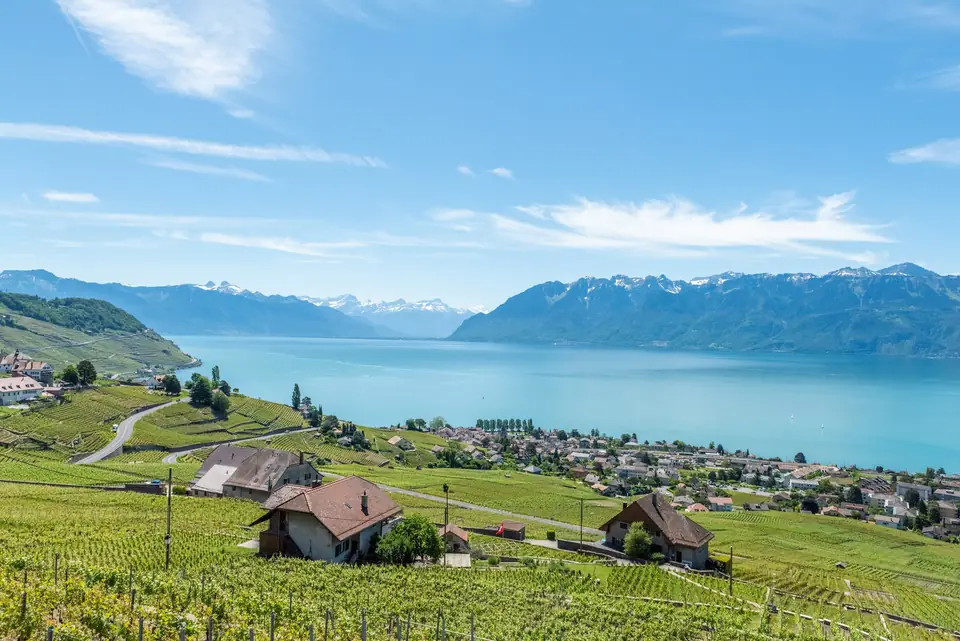
Switzerland has 26 cantonal tax systems, and the best of them (Zug, Nidwalden, Lucerne) tax companies at about 12% and people at single digits. It works if you move there for real, run a real business and can stomach some of the highest costs on the planet. No letterbox version exists.
Our verdict
The cleanest low-tax address in Europe if you’re an EU/EFTA citizen (or wealthy enough for lump-sum taxation) and want low tax without any reputational discount – move to Zug, run the company from there, done. Skip it if you want a remote company, count every franc or hold a non-European passport without a serious business plan: substance, rent and permits will eat the savings before the tax office gets a chance.
15 criteria, each scored 0–10 by a published formula or rubric. Pick who you are – the index re-weights what matters for you.
CompanyResidence
Corporate tax plus dividend withholding on €100,000 profit paid out to a non-resident owner. Transparent entities (US LLC) pay nothing at company level – the owner pays at home, so they get a neutral 5.
Tax while profits stay in the company (Estonia and Georgia: 0%).
Typical yearly cost to keep a small trading company compliant: registered office, accounting, tax filings, audit if mandatory, government fees. Excludes local staff and office rent.
Context: Fiduciary bookkeeping, VAT returns, annual accounts and tax return for a small GmbH typically cost CHF 2,000–5,000; add payroll for your own salary and registry fees. A domicile service or a local director would come on top – not needed if you live there and have an address.
Typical working days from signed documents to a registered company. +1 point (max 10) if it can be done fully remotely.
Context: Notarised articles, a blocked capital deposit account (CHF 20,000 for a GmbH) and entry in the cantonal commercial register – about two weeks when the documents are ready. The bank account is usually the slowest part.
How easy it is for a foreign-owned company to open and keep a business account (local bank or regulated EMI) that works for international payments.
Our assessment: Mainstream banks (PostFinance, cantonal banks, UBS) open accounts for Swiss GmbHs once you’re resident, usually in person within a few weeks. Non-resident owners, some nationalities and US persons face long reviews or refusals.
Number of double tax treaties in force, minus penalties for blacklists that make banks and tax offices nervous: EU list of non-cooperative jurisdictions (Annex I), EU watchlist (Annex II), FATF grey list.
Context: Switzerland has comprehensive tax treaties with more than 100 countries and is on neither EU list (Annex I/II, February 2026) nor the FATF grey list (June 2026).
How much real presence (director, office, staff, board meetings) the company needs locally to be respected as tax resident there and to keep the bank happy. Higher score = lighter burden.
Our assessment: Swiss law requires someone resident in Switzerland who can represent the company, and the low cantonal rate only holds up if management really sits there. Expect a real office and decisions made in Switzerland.
Effective tax a newly arrived resident pays on €100,000 of income from their own (foreign or local) company, using the best regime realistically available to an entrepreneur (non-dom, flat tax, territorial, special regime). Social security excluded.
Context: Single person in the city of Zug, CHF 100,000 gross salary from their own company: about CHF 5,300 federal, cantonal and communal income tax in 2026 (ESTV calculator). Qualifying dividends are only partly taxed (50% in Zug, 70% federal) and come out lower, but the company has paid 11.71% first and a market salary is expected. Social security excluded.
How realistic it is for a non-EU entrepreneur to get a residence permit that also gives tax residency: requirements, cost, time, approval odds. EU citizens usually have it easier – noted in the reason.
Our assessment: For non-EU founders it’s quota-based and needs a business with jobs or investment, or wealth for lump-sum taxation. EU/EFTA citizens are in a different league: a B permit as self-employed within weeks.
Days per year you need to spend there to keep your permit and your tax residency (whichever is stricter, using the most flexible programme).
Context: There is no fixed day count, but a B permit lapses after six months abroad and Swiss tax residence needs your home and centre of life in Switzerland. Plan on living there for most of the year.
Numbeo Cost of Living Index (excl. rent, New York = 100) for the city most expats choose.
Context: Zug is the most expensive city in Numbeo’s ranking, excluding rent – 23% above New York. Zurich is at 120.9.
Numbeo Safety Index for the same city (0–100, higher is safer).
Context: Very safe: Numbeo’s safety index for Zug is 80.7 (Zurich 75.7).
World Bank Worldwide Governance Indicators, Rule of Law percentile rank (0–100). Measures how predictable courts, contracts and property rights are.
Context: Rule of law estimate for 2025 (WGI 2025 revision) ranks Switzerland above 98% of the 215 economies covered.
EF English Proficiency Index score. Countries where English is an official or everyday business language count as 700.
Context: High proficiency nationally (rank 30 in the latest EF EPI) and higher in Zurich and Zug, but daily life and authorities run in German, French or Italian.
What the residence gives you beyond the country: Schengen/EU access, permanent residence and citizenship path, passport strength of a future citizenship, dual citizenship allowed.
Our assessment: Schengen access, a C permit after 10 years (5 for many EU nationals), citizenship after 10 years with dual nationality allowed and one of the world’s strongest passports – but not EU, and the road is long.
Numbers checked October 2026. Click any row for the formula, our reasoning and the source. How the Nerdy Index works
EU and EFTA citizens get a five-year B permit if they prove a real self-employed activity in Switzerland – registered business, business plan, accounts, customers. Without work: enough money and Swiss health insurance. Decided by the canton, usually within weeks.
Third-country nationals need an annual quota slot and must show that the business is in Switzerland’s economic interest: lasting jobs, investment or innovation, plus a solid business plan and capital. Canton and State Secretariat for Migration both decide. A one-person consultancy rarely qualifies.
For non-Swiss citizens moving to Switzerland for the first time (or after 10 years abroad) who don’t work in Switzerland. Taxed on living expenses: at least CHF 435,000 (federal, 2026), seven times the rent, and the cantonal minimum (Zug: CHF 500,000). Abolished in Zurich, Schaffhausen, both Basels and Appenzell Ausserrhoden.
Without work, non-EU nationals can get a permit as retirees (55+, with ties to Switzerland) or when the canton sees an important fiscal interest – in practice a lump-sum tax bill well above the minimum, negotiated case by case.
Switzerland is the low-tax country nobody raises an eyebrow at. No special regime to apply for, no blacklist to explain to your bank – just 26 cantons undercutting each other for companies and residents like petrol stations on the same street, and a few of them winning by a mile. In the city of Zug, a company pays about 11.71% on its profit and a single person earning CHF 100,000 pays roughly CHF 5,300 in income tax.
The catch is equally Swiss: precise and non-negotiable. You have to live there, run the business from there and pay for one of the most expensive places on earth. Here’s how it works as of September 2026, with Zug as our reference canton.
Switzerland rewards people who move for real. The savings sit at canton level, so they follow your home and your company’s management – not a letterbox or a nominee director. Live in Zug, run your GmbH from an office in Zug, send your kids to school there, and the numbers are excellent. Nobody will ever question them either, which is more than most low-tax addresses can say.
It fits well if you’re an EU or EFTA citizen with a profitable, owner-run business (consulting, software, trading, holding), you care more about stability and reputation than the last percentage point, and you’ll pay premium prices for premium everything without sulking. It also fits wealthy people who stop working: lump-sum taxation gets attractive once your income and wealth are large enough.
It’s the wrong choice if you want a company that runs itself from elsewhere, you’re optimizing for low living costs, or you hold a non-European passport and bring neither investment nor jobs. And if your business can’t pay you a Swiss salary, stop here – the tax office expects one, and it knows what Swiss salaries look like.
Compare it with its tiny neighbour Liechtenstein (better for pure wealth structures, much harder to move to) or run your own numbers in the tax calculator.
Two vehicles matter:
Both need a notarised deed, a blocked capital deposit account at a Swiss bank and registration in the cantonal commercial register. The KMU portal puts formation costs at a few thousand francs (notary, advice, CHF 600 register fee). With documents ready, you’re registered in about two weeks – fast, by European standards. The rule that trips people up: someone resident in Switzerland must be able to represent the company. If that’s not you, you’ll need (and pay) a local director.
Corporate tax comes in three layers, because one tax office would be un-Swiss: federal (8.5% on profit after tax, ≈7.8% before tax), cantonal and communal. According to KPMG’s Swiss Tax Report 2026, the combined rate is 11.71% in the city of Zug and 20.54% in Bern; PwC puts the national range at 11.66–20.54%. Lucerne cut its rate to 11.66% and now sits a hair below Zug; Nidwalden is within a fraction of both. Since 2020, cantons can add a patent box and extra R&D deductions. The 15% global minimum tax only bites for groups with €750 million+ turnover. Your GmbH is not the target.
Dividends carry a 35% withholding tax – a deposit the state keeps until you prove you’re honest. Swiss residents get it back in full when they declare the dividend; non-residents reclaim part of it under a treaty, typically ending at 15%. Distributions out of capital contribution reserves (money you paid in) are free of withholding tax.
Figures rounded; income tax from the ESTV calculator (2026, single, city of Zug). We use euros for comparability – the logic is the same in francs.
| Step | You live in Zug, take dividends | You live abroad (treaty country) |
|---|---|---|
| Profit | €100,000 | €100,000 |
| Corporate tax 11.71% | −€11,710 | −€11,710 |
| Dividend | €88,290 | €88,290 |
| Withholding tax 35% | refunded when declared | 15% remains after reclaim: −€13,240 |
| Personal income tax | ≈ −€2,700 (dividend only partly taxed: 50% cantonal, 70% federal) | taxed again at home, with credit |
| In your pocket | ≈ €85,600 (≈14% total) | ≈ €75,000 before home tax |
Paying everything as dividends looks great on paper and doesn’t survive contact with Swiss social security. It expects an owner-manager to draw a market salary and can reclassify excessive dividends. Salary is deductible for the company and taxed at about 5% on CHF 100,000 in Zug, but it costs social contributions (AHV/IV/EO plus unemployment insurance, split between you and the company, plus a pension fund). The sweet spot is a reasonable salary plus dividends. Your fiduciary will model it, in a spreadsheet with more tabs than you’d like.
A small GmbH typically spends CHF 2,000–5,000 a year on bookkeeping, VAT returns, annual accounts and tax return, plus payroll. Small companies can skip the audit (opting out) if all shareholders agree – do it. Budget around €5,000 a year if you run it yourself from home; add a domicile service or local director if you don’t.
Banks: once you’re resident, PostFinance, the cantonal banks or UBS will open a business account, usually after a meeting with a relationship manager and a very good coffee. Non-resident owners, some nationalities and US persons get longer reviews or a polite, beautifully formatted no. Numbered accounts are history – Switzerland exchanges bank data automatically under CRS, so forget the movie version.
Substance is the whole point. A Zug company managed from Munich is a Munich company in the eyes of the German tax office, and it will say so in writing. Read our guide on place of management before you plan anything clever.
After 10 years you can get a C permit (settlement), many EU nationals after five. Citizenship needs 10 years of residence and a C permit; dual nationality is allowed.
Swiss residents pay progressive federal income tax (up to 11.5%) plus cantonal and communal tax. In the city of Zug, CHF 100,000 gross salary costs about CHF 5,300 in income tax (2026), CHF 200,000 about CHF 23,000. The same CHF 100,000 in the city of Zurich costs about CHF 11,800. Every canton also has a wealth tax – low in Zug, but it exists, which surprises people who only read the headlines. Private capital gains on shares are generally tax-free – with strict rules on “indirect partial liquidation” and professional trading. The Juso inheritance tax initiative (50% above CHF 50 million) was rejected by 78% in November 2025. Swiss voters get asked whether they want higher taxes and, remarkably often, say no.
Non-Swiss citizens who move to Switzerland for the first time (or after 10 years abroad) and don’t work in Switzerland can be taxed on their living expenses instead of their income. The tax base is the highest of: actual worldwide living expenses, seven times the rent, the federal minimum of CHF 435,000 (2026) and the cantonal minimum – CHF 500,000 in Zug. Normal rates apply to that base. Managing your own wealth is fine; running your company from your Swiss living room is not, and “just a few emails” is how people lose the deal. It’s abolished in Zurich, Schaffhausen, both Basels and Appenzell Ausserrhoden.
Here’s where the tax savings go to die. Zug is the most expensive city in Numbeo’s ranking: 123.2 excluding rent, 23% above New York. Rents are steep, and basic health insurance is mandatory and paid per person – yes, per child too. In return you get a Numbeo safety index of 80.7, spotless trains, lakes and mountains on your doorstep and some of the best schools and hospitals in the world. English works in business (Switzerland scores 564 in EF EPI, higher in Zurich and Zug), but the admin runs in German, the recycling rules deserve their own guide and friendships take years, not weekends.
Germany taxes unrealized gains in company shares when you leave (see exit tax). The Germany–Switzerland treaty also lets Germany keep taxing your German-source income for five years after the move, and Swiss lump-sum taxation can trigger Germany’s extended limited tax liability.
If the company is really run from your old country, it’s taxed there. See place of management.
Someone living in Switzerland must be able to sign for the company. No resident, no company – or a nominee bill.
Too little salary and the social security office reclassifies dividends; too much and you lose the partial taxation benefit.
35% is withheld first. Residents get it back, non-residents fill in forms and wait.
Rent, health insurance and childcare can eat a big part of the tax advantage below a certain income.
Model exit tax, deregistration and the five-year treaty clause with an advisor in your current country.
Compare Zug, Nidwalden, Schwyz and Lucerne on company and personal tax, schools and rent.
EU/EFTA: rent a home, register with the municipality, apply for the B permit as self-employed. Non-EU: prepare the business plan and investment case before you move.
Notary, capital deposit account, commercial register – about two weeks.
Open the business account, register for VAT if needed, set a market salary and join a pension fund.
Health insurance within three months, school, car, and a clean break with your old home.
No. Dubai has no personal income tax, and Switzerland can’t beat zero. It wins on reputation, treaties, stability and Schengen – and for many people that’s worth 5–15%.
Keeping a home available to you in Germany usually keeps you taxable there. See leaving Germany and tax residency.
Not from Switzerland. You may manage your own wealth and work abroad, but no gainful activity in Switzerland.
Yes, but it’s demanding: a business plan with real jobs and investment, a qualified job offer, or enough wealth for lump-sum taxation in a canton that wants you.
Not sure whether Switzerland beats Cyprus or Malta for your case? Try the Jurisdiction Finder or book a strategy session. This guide is general information, not tax or legal advice.
Every number on this page comes from one of these. Last checked October 2026. Tax law changes – confirm with a licensed advisor before acting. Nothing here is tax or legal advice.
 Remote setup€€€
Singapore
17% on paper, often under 9% in practice, tax-free dividends and a reputation even banks respect – a home for the company, not for cheap living.
Corp. tax17%Dividends0%Residency
Open the guide
 €€€
Liechtenstein
12.5% flat tax, 0% dividend withholding and foundations with a century of practice – getting a permit is the hard part.
Corp. tax12.5%Dividends0%Residency
Open the guide
 EU0% retained€€€
Estonia
0% tax while profits stay in the company, 22% the day you pay out – and a company you run from your laptop.
Corp. tax0%/ 22%Dividends0%Residency
Open the guide
 Citizenship & visasDual citizenship rules 2026: who lets you keep bothWhich countries allow dual citizenship in 2026, when you lose your first passport by naturalising, and the tax, military and consular side effects. 9 min · checked September 2026
 Citizenship & visasFastest naturalisation 2026: years to citizenshipHow many years of residence you need for citizenship in 2026 – Argentina to Sweden, dual-citizenship rules, language tests and the 2025–26 changes. 8 min · checked September 2026
 Leaving your countryLeaving Austria: taxes, exit tax and deregistrationAustria taxes you while you keep a home there. Wohnsitz, six-month rule, Zweitwohnsitz rule, 27.5% exit tax on portfolios and a 12-month exit plan. 14 min · checked September 2026
Pupils block the schools, the debt hits 119% of GDP and Paris pays more interest than Athens. What that costs savers and founders across the euro area.
The chancellor is finished, the debt isn’t. What Berlin’s budget does when interest rates rise, who paid last time, and what founders should decide now.
DAC8 reports your exchange, Austria taxes your bag at the border, Germany may not tax it at all. Who should move with crypto in 2026 – and who shouldn’t.
Tell us what you want to set up and where. You get one fixed quote for the work of a vetted, licensed partner in that jurisdiction – no bidding war, no surprise fees, no “that’ll be extra” in month three. Not sure yet? Book a Strategy Session first – it’s credited if you go ahead.
Popular
↑↓ select↵ open/ or ⌘K searchT theme