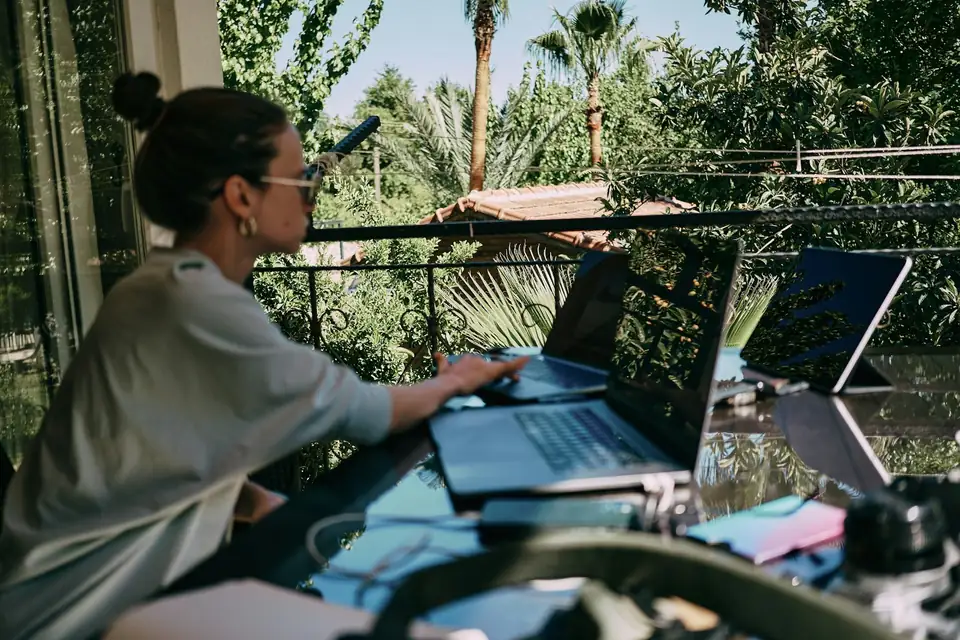







Romania offers a 10% flat income tax, a 1% turnover tax for small companies, fast fibre internet and living costs that make Western Europeans double-check the bill. It also offers a paperwork culture that still loves a stamp. This guide gets you through it: permits, registrations, the bank, the flat and your first 90 days.
It’s general information as of September 2026, not advice. For the tax detail (micro-company rules, 16% dividend tax, corporate tax) see our Romania country guide.
Which permit fits you#
| Route | Who it’s for | Key requirement |
|---|---|---|
| Registration certificate | EU, EEA and Swiss citizens | Register at the IGI office in your county after three months; documents depend on your purpose (work, business, sufficient funds); issued the same day, valid up to five years, with your CNP |
| Digital nomad visa | Non-EU remote workers for a foreign employer or own foreign company | Income of at least three times the Romanian average gross salary for the last six months (roughly €5,500 a month in 2026; the figure moves); one year, renewable |
| Temporary residence for commercial activities | Non-EU shareholders and managers of a Romanian company | Approved business plan, at least €100,000 invested (SRL) and at least ten jobs within 12 months |
| Work permit | Non-EU employees of Romanian companies | Employer-led procedure, then a long-stay visa and residence permit |
EU citizens have it easiest: one IGI visit and you walk out with a certificate and a CNP.
The nomad visa is generous on paper but has a high income bar and needs income from abroad. Non-EU founders who want to run a Romanian SRL usually need the business route with real investment and local jobs. Our digital nomad visa guide compares Romania with other programmes.
Your first 90 days#
From boarding pass to tax resident
Before you go: pick the city
Bucharest for business, ministries and the most flights. Cluj-Napoca for the tech scene and a younger crowd. Timișoara for a relaxed western city close to Hungary and Serbia. Brașov for mountains on your doorstep. If you’re leaving Germany, work through our leaving Germany checklist first.
Before you go: paperwork and translations
Collect apostilled certificates and have them translated into Romanian by an authorised translator; many offices also want the translation notarised. Non-EU applicants need a long-stay visa before entering. Book a short-let for your first month so you can view flats in person.
Week 1: flat and address
Sign a written lease in your own name. For IGI you need proof of accommodation, usually a lease registered with ANAF or the owner’s written consent. Ask the landlord before you commit.
Week 1: mobile and internet
Orange, Vodafone, Digi and Telekom cover the country. Digi’s home fibre is famously fast and cheap.
Month 1: IGI registration and CNP
Submit your documents online through the IGI portal first, then attend the appointment at the IGI office in your county with ID, lease and proof of your purpose (employment, business, or funds plus health insurance). The registration certificate, including your CNP, is usually issued the same day.
Month 1: ANAF and the SPV account
Your CNP is your tax identification number. Create an account in ANAF’s online Virtual Private Space (SPV) so you can file declarations and receive tax letters digitally. ANAF may ask newcomers to fill in a questionnaire to determine their tax residency status.
Month 1: health insurance
Employees are insured through payroll. Self-employed people and anyone with dividend, rental or other non-salary income pay the 10% health contribution (CASS) and are insured through the national health insurance house. If your non-salary income is low, you can pay CASS voluntarily to be covered. Nomad visa holders need private insurance.
Month 1 to 3: bank account
Banca Transilvania, BCR, BRD, ING and others will ask for your ID, registration certificate, lease, source of funds and proof of income. One visit and some weeks of KYC is typical. Keep your old EU account and an e-money account running meanwhile; see offshore banking.
Month 3: day log and old-country exit
Start a day log from day one; our day tracker does it for you. De-register in your old country and make sure your old home doesn’t keep you tax resident there.
Month 3: driving licence
EU licences stay valid; you can exchange them at the driving licence service (DRPCIV). Some non-EU licences can be exchanged under bilateral agreements; others mean a Romanian test. Check early rather than driving on a foreign licence for years.
After year-end: tax residency certificate
Your old country will want proof. Request a certificate of tax residence from ANAF, which you can do through SPV. It covers a calendar year.
Finding a flat#
Rents are our estimate as of September 2026 for long-term, furnished flats in decent areas. They are not official statistics; Romanian listings count rooms, so a “2 camere” is a one-bedroom flat.
| City | 1-bedroom | 2–3 bedrooms |
|---|---|---|
| Bucharest | €500–800 | €700–1,300 |
| Cluj-Napoca | €450–700 | €650–1,100 |
| Timișoara | €350–550 | €500–850 |
| Brașov | €350–600 | €500–900 |
Many leases are quoted in euros and paid in lei at the day’s rate. Agree which exchange rate applies.
- Deposit. Typically one to two months’ rent. Get a handover protocol with meter readings.
- Agents. Many listings go through agents, often with a fee of around half to one month’s rent, sometimes paid by the tenant.
- Lease registration. Landlords must declare rental income to ANAF. A registered lease is your best proof of address; an undeclared one is weak.
- Earthquake risk. Bucharest is in a seismic zone. Older buildings classed as high risk carry a red disc (“bulina roșie”) at the entrance. Check the rating before you sign.
What it costs per month#
Estimate as of September 2026, based on our own research and typical asking prices; not official statistics. Single in a 1-bedroom, couple in a 2-bedroom.
| Item | Single | Couple |
|---|---|---|
| Rent (Bucharest) | €500–800 | €700–1,200 |
| Utilities (heating, electricity, water, building costs) | €90–200 | €130–280 |
| Mobile and internet | €20–40 | €30–55 |
| Groceries | €280–420 | €500–750 |
| Health (CASS or private) | €40–120 | €80–240 |
| Transport | €40–200 | €80–300 |
| Eating out and other | €250–500 | €400–850 |
| Total, Bucharest | €1,220–2,280 | €1,920–3,675 |
| Total, Timișoara | €1,070–2,030 | €1,720–3,325 |
The Timișoara total swaps in the lower rents from the flat table and leaves the rest roughly the same. CASS on dividends is a yearly amount, not monthly; see the traps below.
Documents to bring#
What goes in the folder
Tick them off – your progress is saved in this browser only.
Valid for the whole period you apply for. Non-EU applicants need a passport and a long-stay visa.
Birth and marriage certificates, children’s birth certificates. Translated into Romanian by an authorised translator, often notarised.
Required for most non-EU permits.
Employment contract, client contracts, company documents. For the nomad visa, six months of income at three times the average gross salary.
Private cover until you’re insured in Romania, including family members.
For the business route: business plan, proof of investment and hiring plan.
Banks will ask where your money comes from. Tax returns, sale contracts and payslips save weeks.
Plus a certified translation for the exchange.
Registered with ANAF or backed by the owner’s consent; needed for IGI, the bank and your tax residency.
Common traps#
Where moves to Romania go wrong
Forgetting the health contribution on dividends.
On top of the 16% dividend tax, residents owe 10% CASS on non-salary income above 6 minimum wages a year. The base is capped in brackets: 6, 12 or 24 minimum wages. At the start of 2026 that meant bases of RON 24,300, 48,600 or 97,200, so at most about RON 9,720 a year. A minimum-wage increase scheduled for mid-2026 shifts these figures, so check the current value.
Assuming the micro-company regime fits.
1% of turnover only works up to €100,000 revenue in 2026, with at least one employee, and not if the same shareholder controls another micro-company. Grow past it and you pay 16% corporate tax.
Underestimating the nomad visa threshold.
Three times the average gross salary is a high bar, and it tracks official statistics, so it moves. The income has to come from abroad.
No written, declared lease.
Without it, IGI registration and the bank get difficult.
Signing for a red-disc building.
In Bucharest, check the seismic risk class of older blocks before you rent.
Assuming 183 days settles it.
Romania also looks at domicile and centre of vital interests; your old country applies its own rules and the treaty.
Taxes and days#
The tax side deserves its own reading. Our tax residency guide explains how the 183-day test interacts with your old country and why a treaty tie-breaker can still pull you back. Running a company? Read company abroad on where it’s managed from.
This guide is general information, not tax or legal advice. Want your move and your company set up to work together? Book a strategy session, or compare Romania with other options in the Jurisdiction Finder.
FAQ#
Do EU citizens need a visa to move to Romania?
No. You can stay three months without formalities. After that, register at the IGI office in your county and get a registration certificate with your CNP.
What is the CNP?
The personal numeric code (CNP) is printed on your registration certificate or residence permit. It’s your tax number with ANAF and unlocks banks, doctors, payroll and utilities.
Do I pay health contributions on dividends?
Yes, as a Romanian resident, once your non-salary income exceeds 6 minimum gross wages a year. CASS is 10% of a capped base of 6, 12 or 24 minimum wages, depending on your income.
How do I prove Romanian tax residency to my old country?
Request a certificate of tax residence from ANAF, which you can do through your SPV account. It covers a calendar year.
Is the digital nomad visa a good fit for founders?
Only if your company is abroad. It requires income from a foreign employer or your own foreign company. To run a Romanian SRL from Romania, look at the business route or, as an EU citizen, simply register.
Can I drive with my foreign licence?
EU licences stay valid and can be exchanged at DRPCIV. Some non-EU licences can be exchanged under bilateral agreements; others require a Romanian test.
Sources#
- General Inspectorate for Immigration (IGI) – Citizens of EU/EEA
- General Inspectorate for Immigration (IGI) – Residence registration
- Ministry of Foreign Affairs – e-Visa portal
- ANAF – National Agency for Fiscal Administration
- PwC Worldwide Tax Summaries – Romania, other taxes (social and health contributions)
- PwC Worldwide Tax Summaries – Romania, withholding taxes
- National Trade Register Office (ONRC)
- Your Europe – Registering residence abroad