






Bulgaria is the quiet overachiever of EU tax: 10% on company profits, 10% on salaries, 5% on dividends, and since 2026 the euro in your wallet. No special regime to apply for, no 17-year clock. The catch is that you actually have to live there. This guide is about exactly that: permits, registrations, the bank, the flat and your first 90 days.
It’s general information as of September 2026, not advice. For the tax detail (rates, worked examples, the withdrawn dividend tax hike) see our Bulgaria country guide.
Which permit fits you#
| Route | Who it’s for | Key requirement |
|---|---|---|
| Long-term residence certificate | EU, EEA and Swiss citizens | Apply within three months of arrival at the Migration Directorate; show work, a business or sufficient funds plus health insurance and an address |
| Digital nomad residence permit | Non-EU remote workers for employers or clients outside the EU/EEA | Income of at least 50× the Bulgarian minimum wage in the previous year (about €31,000 in 2026), health insurance, housing; one year, renewable once |
| Type D visa and permit via a Bulgarian company | Non-EU founders and managers | A company with real activity, typically a qualifying investment or local jobs under the Foreigners Act; permanent residence possible after five years |
| Permanent residence | Anyone after five years of legal residence | Continuous legal stay; citizenship is a separate, longer path with a language test |
EU citizens have it easiest: no visa, no quota, free access to work, and the certificate itself is issued quickly once your papers are in order.
Non-EU founders usually compare the nomad permit with the company route. The nomad permit needs income from outside the EU/EEA and caps out at two years. If you want to build a Bulgarian business and stay long term, the company route is the one that leads to permanent residence. Our digital nomad visa guide compares Bulgaria with other programmes.
Your first 90 days#
From boarding pass to tax resident
Before you go: pick the city
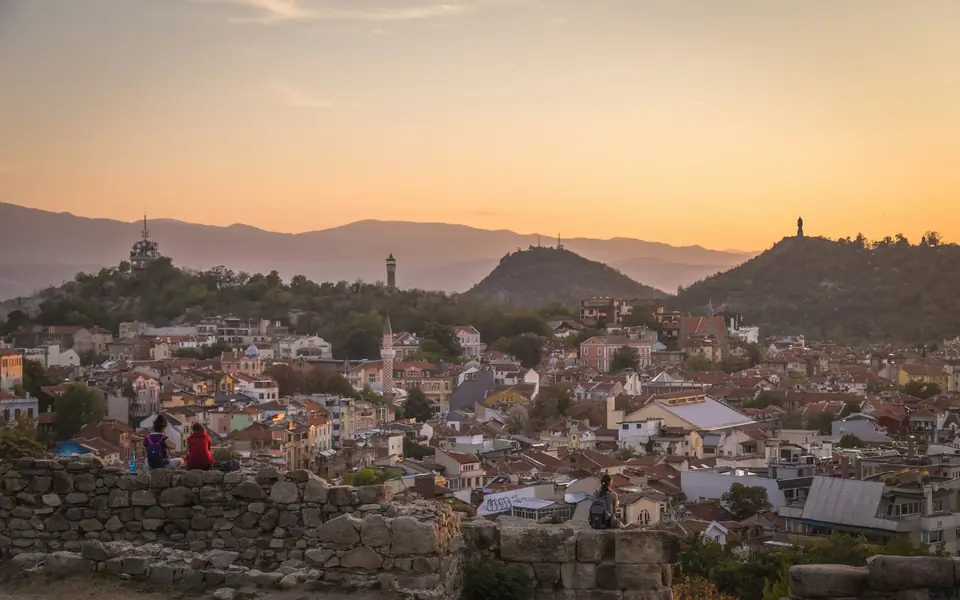
Sofia for the tech scene, the airport and the ministries. Plovdiv for old-town charm at lower rents. Varna or Burgas for the Black Sea, with a quiet winter. Bansko for skiing and a nomad crowd. If you’re leaving Germany, work through our leaving Germany checklist first.
Before you go: paperwork and translations
Collect apostilled certificates (birth, marriage, degrees) and a criminal record extract if you’re non-EU. Bulgarian authorities want documents translated into Bulgarian by a sworn translator, and many offices won’t take anything else. Book a short-let for your first month so you can view flats in person.
Week 1: flat and address
Sign a written lease in your own name, ideally with notarised signatures. You need a Bulgarian address for the residence certificate, the NRA and the bank. Cash-only “we don’t need a contract” deals are common and useless as proof.
Week 1: mobile and internet
A1, Yettel and Vivacom cover the country. Bulgarian home internet is fast and cheap, a pleasant surprise for anyone arriving from Germany.
Month 1: residence certificate and LNCh
EU citizens apply at the Migration Directorate in Sofia or a regional directorate of the Ministry of Interior within three months of arrival. Bring your ID or passport, lease, proof of income or funds, and health insurance. The certificate carries your personal number of a foreigner (LNCh). Non-EU applicants file their permit application, usually after entering on a type D visa.
Month 1: NRA and health insurance
The LNCh is your tax identifier with the National Revenue Agency (NRA). Once you’re a long-term resident you fall into the public health insurance system (NHIF) and pay 8% of your insurable income. Employees share this with the employer; self-employed people and company owners without a salary pay it themselves, on at least the minimum insurable income. Many foreigners add private cover for faster access.
Month 1 to 3: bank account
DSK, UniCredit Bulbank, Postbank, Fibank and others will ask for your ID, residence certificate, address proof, source of funds and a clear story. Grey-list status means extra checks, and banks usually want to see you in person. Keep your old EU account and an e-money account running; see offshore banking.
Month 3: day log and old-country exit
Start a day log from day one; our day tracker does it for you. De-register in your old country, and make sure your old home doesn’t keep you tax resident there. Our tax residency guide explains the tie-breakers.
Month 3: driving licence
EU licences stay valid. Holders of non-EU licences can drive for up to one year after taking up residence, then need a Bulgarian licence. Exchange without a test works for licences from Vienna Convention countries and countries with a bilateral agreement, at the traffic police (KAT).
After year-end: tax residency certificate
Your old country will want proof. Apply to the NRA on its form for a certificate of tax residence, with evidence of your address, living costs and ties to Bulgaria. It covers a calendar year and proves residency; it doesn’t create it.
Finding a flat#
Rents are our estimate as of September 2026 for long-term, furnished or semi-furnished flats in decent areas. They are not official statistics; new-build flats in central districts sit at the top of the ranges.
| City | 1-bedroom | 2–3 bedrooms |
|---|---|---|
| Sofia | €550–850 | €800–1,400 |
| Plovdiv | €380–600 | €550–900 |
| Varna | €400–650 | €600–1,000 |
| Bansko | €350–550 | €500–800 |
Varna and Burgas are seasonal: summer short-lets push long-term supply down, and winter leases are easier to find.
- Deposit. Typically one to two months’ rent. Get the handover protocol (condition of the flat, meter readings) in writing.
- Agents. Most listings go through agents, and the tenant often pays a fee of around half to one month’s rent. Ask before the viewing.
- Written lease. Insist on one, in Bulgarian and English. The residence certificate, the NRA and the bank all want to see it.
- Heating. Many Sofia flats run on district heating (Toplofikatsia) with separate bills. Ask what last winter cost.
What it costs per month#
Estimate as of September 2026, based on our own research and typical asking prices; not official statistics. Single in a 1-bedroom, couple in a 2-bedroom.
| Item | Single | Couple |
|---|---|---|
| Rent (Sofia) | €550–850 | €800–1,200 |
| Utilities (electricity, heating, water) | €100–200 | €140–260 |
| Mobile and internet | €25–45 | €40–60 |
| Groceries | €250–380 | €450–650 |
| Health (NHIF minimum or private top-up) | €50–120 | €100–240 |
| Transport (public transport or small car) | €40–250 | €80–350 |
| Eating out and other | €200–450 | €350–750 |
| Total, Sofia | €1,215–2,295 | €1,960–3,510 |
| Total, Plovdiv or Varna | €1,045–2,045 | €1,710–3,210 |
The cheaper-city total swaps in the lower rents from the flat table and leaves the rest roughly the same. Sofia works without a car; the coast and the mountains mostly don’t.
Documents to bring#
What goes in the folder
Tick them off – your progress is saved in this browser only.
Valid for the whole period you apply for. Non-EU applicants need a passport and the right visa.
Birth and marriage certificates, children’s birth certificates. Translated into Bulgarian by a sworn translator.
Required for most non-EU permits, from your country of origin and residence if different.
Employment contract, client contracts, company documents or bank statements. For the nomad permit, proof of last year’s income from outside the EU/EEA.
Private cover until you’re in the NHIF system, including family members.
Tax returns, sale contracts and payslips. With Bulgaria on the grey list, this folder saves you weeks at the bank.
Useful for work permits and regulated professions; apostilled and translated.
Plus a certified translation if it isn’t in Latin script or doesn’t list categories clearly.
Needed for the residence certificate, the NRA, the bank and later the tax residency certificate.
Common traps#
Where moves to Bulgaria go wrong
Counting on the 183 days alone.
Bulgarian law looks at more than 183 days in any 12 months and your centre of vital interests. Keep a home, family or business in your old country and that country may still claim you, whatever the day count says.
Assuming “registered” means “tax resident”.
A residence certificate or permanent address is evidence, not proof. The NRA looks at where you actually live; your old country looks at its own rules and the treaty.
Underestimating grey-list banking.
Bulgaria is under FATF increased monitoring as of June 2026, with removal expected at a later plenary. Until it’s off, some foreign banks and payment providers run extra checks on Bulgarian transfers. Check the current FATF list before you plan around it.
Cash leases and no paperwork.
Handshake rentals save the landlord tax and cost you your proof of address. No lease, no certificate, no bank.
Running the company from elsewhere.
The 10% rate assumes the company is managed in Bulgaria. Manage it from Germany and Germany may tax it; see company abroad.
Ignoring the language.
Forms, offices and many bank branches work in Bulgarian. A local accountant or relocation helper is cheaper than weeks of queueing.
Taxes and days#
The tax story is simple: 10% flat income tax, 5% on dividends, 10% on company profits, and no special regime to apply for. What matters is being resident. Our tax residency guide explains how the 183-day test interacts with your old country and why a treaty tie-breaker can pull you back.
This guide is general information, not tax or legal advice. Want your move and your company set up to work together? Book a strategy session, or compare Bulgaria with other options in the Jurisdiction Finder.
FAQ#
Do EU citizens need a visa to move to Bulgaria?
No. You can stay three months with your passport or ID. If you stay longer, apply for a long-term residence certificate at the Migration Directorate within three months of arrival.
What is the LNCh and why does it matter?
The personal number of a foreigner (LNCh) is printed on your residence certificate. It works as your tax number with the NRA and unlocks health insurance, payroll, banks and utility contracts.
Can I join the public health system?
Long-term residents are part of the NHIF system and pay 8% of their insurable income. Employees split it with the employer; self-employed people pay it on at least the minimum insurable income. Nomad permit holders need private cover.
How do I prove Bulgarian tax residency to my old country?
With a certificate of tax residence from the NRA. You apply on the NRA form with evidence of address, living costs and ties to Bulgaria. It covers one calendar year, so plan to reapply.
Does the grey list affect me personally?
Mostly at the bank. Expect more questions on source of funds and occasional delays on transfers abroad. It doesn’t change your tax rates or your residence rights.
Can I drive with my foreign licence?
EU licences stay valid. Non-EU licences work for up to one year after you take up residence; then exchange them (Vienna Convention or bilateral-agreement countries) or take the Bulgarian test.
Sources#
- Ministry of Interior, Migration Directorate – Citizens of the EU
- Your Europe – Registering residence abroad
- National Revenue Agency (NRA)
- PwC Worldwide Tax Summaries – Bulgaria, individual residence
- PwC Worldwide Tax Summaries – Bulgaria, other taxes (social and health contributions)
- Ministry of Interior – Replacing a foreign driving licence with a Bulgarian one
- FATF – Jurisdictions under increased monitoring (June 2026)
- Council of the EU – Bulgaria adopts the euro from 1 January 2026