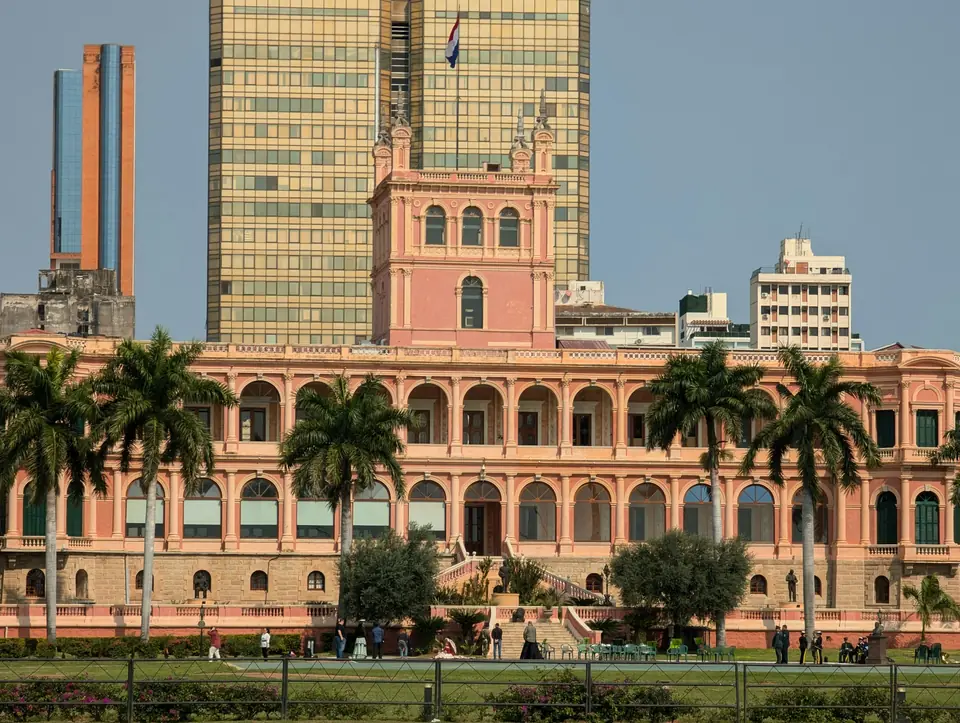







Paraguay is the country people mention in a whisper at founder dinners: territorial tax, 10% rates and a residence permit without an income test. All true. What the whisper leaves out is the part this guide covers: queues at Migraciones, translated documents, landlords who want a local guarantor and a tax residency that only counts if you actually show up.
This is general information as of September 2026, not advice. For the tax detail (IRE, IDU, worked examples, treaties) see our Paraguay country guide.
Which permit fits you#
| Route | Who it’s for | Key requirement (as of 2026) |
|---|---|---|
| Temporary residence (Law 6984/2022) | Anyone who wants to settle, EU citizen or not | In person at the Dirección Nacional de Migraciones (DNM); apostilled documents and criminal records; fee PYG 2,926,925; up to 2 years, renewable; no income or investment proof |
| Permanent residence (change of category) | Temporary residents | Apply in the 3 months before the temporary card expires; proof of economic solvency (income or assets) and fresh criminal records; card valid for 10 years |
| Investor Pass (Constancia de Inversionista Extranjero) | Investors who want permanent residence straight away | Certificate from the Ministry of Industry and Commerce via SUACE under Resolution 283/2026; from USD 70,000 in a productive business with a plan for at least 5 formal jobs; higher amounts for other categories |
| Mercosur residence | Citizens of Mercosur and associated countries | Simplified two-year residence; not relevant for most Europeans |
There is no separate track for EU citizens. Europeans can visit visa-free, but anyone who wants to live in Paraguay goes through the same DNM process.
The temporary route is the classic: cheap, no income test, permanent residence after about two years. The Investor Pass makes sense if you are genuinely building a local business anyway. Our easiest residency permits guide puts Paraguay next to the other low-barrier options.
Your first 90 days#
From boarding pass to cédula
Before you go: apostilles and criminal records
Order your birth certificate, marriage certificate if relevant, and a criminal record certificate from your country of origin or last residence, all apostilled. Check how recent the record must be when you file; if it expires in a DNM queue, you start again. Bring originals plus copies.
Before you go: exit planning
Decide where your company will be managed and what happens to your home, your registration and your bank accounts. If you’re leaving Germany, work through our leaving Germany checklist before you book the flight.
Week 1: entry stamp and translations
Make sure your passport is stamped on arrival and keep any entry form: the DNM wants proof of entry. Have every foreign document translated into Spanish by a translator registered (matriculado) in Paraguay. Translations done at home usually don’t count.
Week 1: local certificates
Get the Interpol criminal record certificate and the Paraguayan police record from the National Police in Asunción. Both are on the DNM checklist, and both are only issued locally.
Week 1 to 2: file at Migraciones
File your temporary residence application in person at the DNM in Asunción: identity document, proof of entry, birth and civil status certificates, criminal records, sworn statements on your activity and your Paraguayan address, and the fee of PYG 2,926,925 (as of 2026). From filing, you have “precarious resident” status, which lets you leave, re-enter, study and work while you wait.
Month 1: flat, utilities and phone
Move from the short-let into a long-term flat (see below). Electricity comes from the state utility ANDE, water in Asunción usually from ESSAP; the landlord typically keeps the accounts in their name. Tigo, Personal and Claro are the mobile and internet providers.
Month 1 to 3: residence card and cédula
Processing takes weeks to a few months. Once the residence is granted, apply for the cédula de identidad at the National Police identification department; it carries the same validity as your residence.
Month 3: RUC and bank
Register for a tax ID (RUC) with the tax authority DNIT if you earn Paraguayan-source income, or if you want a tax residency certificate later: the certificate requires a RUC. With a cédula, local banks will talk to you. Expect in-person visits, source-of-funds questions and patience; keep your European and e-money accounts running. See offshore banking.
From day one: count your days
Start a day log with our day tracker. Tax residency needs more than 120 days in the calendar year, and the DNIT checks your migration record when you ask for the certificate.
After year-end: tax residency certificate
Apply to the DNIT for a certificado de residencia fiscal with your RUC, cédula and a migration movement record from Migraciones for that year, with your tax filings up to date. It’s issued within ten working days and is valid for one year.
Around month 21: permanent residence
Diarise the window: permanent residence is filed in the three months before your temporary card expires. You’ll need to show economic solvency this time, so keep bank statements, contracts and invoices tidy from month one.
Finding a flat#
Rents are our estimate as of September 2026 for furnished or semi-furnished flats in good areas; there is no official rent statistic we could rely on. Many listings quote US dollars, some guaraníes.
| Area | 1-bedroom | 2–3 bedrooms |
|---|---|---|
| Asunción: Villa Morra, Carmelitas, Las Mercedes, Recoleta | €450–750 | €700–1,300 |
| Asunción: other central districts | €350–550 | €500–900 |
| Encarnación, San Bernardino, Luque | €300–550 | €450–850 |
New towers with a pool, gym and generator sit at the top of these ranges; older houses with a yard can be cheaper and hotter.
- Guarantee. Landlords often want a local guarantor (garante) or a guarantee policy. Without one, expect to pay more months upfront.
- Contract. Get a written lease in your name. You need an address for your DNM sworn statement, and a lease is the best proof you live there.
- Air conditioning. Summers regularly pass 35 °C. Check every unit works and ask what the last summer’s ANDE bills were.
- Power cuts. Storms can knock out power. Buildings with a generator are worth the premium.
- Scams. Don’t pay deposits for flats you haven’t seen. Viewing in person is easy once you’re in Asunción.
What it costs per month#
Estimate as of September 2026, based on our own research and typical asking prices; not official statistics. Single in a 1-bedroom, couple in a 2-bedroom, in a good Asunción district.
| Item | Single | Couple |
|---|---|---|
| Rent (Asunción, good district) | €450–750 | €650–1,200 |
| Utilities (electricity with AC, water) | €60–150 | €90–200 |
| Mobile and internet | €30–50 | €40–70 |
| Groceries | €250–350 | €450–600 |
| Private health insurance | €60–150 | €120–300 |
| Transport (ride-hailing or car running costs) | €80–250 | €120–350 |
| Eating out and other | €200–400 | €350–650 |
| Total, Asunción | €1,130–2,100 | €1,820–3,370 |
| Total, Encarnación or San Bernardino | €980–1,900 | €1,620–3,020 |
Imported goods, electronics and international schools cost European prices or more. Local beef, fruit and services are where the savings are.
Documents to bring#
What goes in the folder
Tick them off – your progress is saved in this browser only.
Valid for the whole process, plus copies. The DNM wants the original and authenticated copies.
Translated into Spanish by a translator registered in Paraguay.
Marriage, divorce or death certificate where relevant, also apostilled and translated. Children’s birth certificates for family members.
From your country of origin or last residence, apostilled and translated. Check how recent it must be.
Passport stamp or the sealed migration form from your arrival.
Not needed for temporary residence, but for permanent residence and for banks: bank statements, contracts, invoices, pension or dividend statements.
Only for that route: business plan with an implementation timeline, proof of the investment and its origin, and company documents.
Plus an international driving permit. Licences are issued by the municipalities; ask yours whether you can exchange or need to test.
Common traps#
Where Paraguay moves go wrong
Paper residence.
A cédula without more than 120 days a year and a real life in Paraguay convinces nobody, least of all your old tax office.
Translations from home.
Documents translated abroad are often rejected. Use a translator registered in Paraguay and save yourself a second trip to the DNM.
Expired certificates.
Criminal records and apostilles age while you gather everything else. Order them last, file first.
Missing the permanent residence window.
The change of category is filed in the three months before the temporary card expires. After expiry there is a short grace period, with a fine.
Assuming foreign means untaxed.
Territorial taxation covers foreign-source income. Work for Paraguayan clients, or payouts from a Paraguayan company, are taxed locally.
Forgetting the old country.
Exit tax, extended tax liability and CFC rules at home don’t care about your cédula. See tax residency.
Taxes and days#
Paraguay taxes residents only on Paraguayan-source income, at 8–10% for individuals. That’s the headline. The practical side: you become tax resident with more than 120 days in the country in a calendar year, and you prove it with the DNIT certificate, which needs a RUC and your migration record. Paraguay has only a handful of tax treaties (none with Germany, Austria or Switzerland), so there is no tie-breaker to settle a dispute with your old country. Our tax residency guide explains why that matters.
This guide is general information, not tax or legal advice. Want the move, the company and the exit planned together? Book a strategy session, or compare Paraguay with other options in the Jurisdiction Finder.
FAQ#
Do I have to be in Paraguay to apply for residence?
Yes. The DNM process is personal and in person in Asunción. Plan one trip of a few weeks for filing and local certificates, and ideally a second one to collect the card and cédula.
Can I work while my application is pending?
Yes. From filing you have precarious resident status, which the DNM says allows you to leave and re-enter, study and work legally while you wait.
How long until I get the cédula?
Usually weeks to a few months for the residence decision, then the cédula at the National Police. Complete, correctly translated documents are the biggest accelerator.
Is the Investor Pass worth it?
If you plan a real local business with staff anyway, it saves you the temporary stage and the permanent residence application two years later. For a pure Plan B residence, temporary residence is far cheaper.
Do I become tax-free in Paraguay?
You pay no Paraguayan tax on foreign-source income once you’re resident here. Whether your old country lets you go is a different question, answered by your days, home and ties there.
Do I need to speak Spanish?
For daily life in Asunción, a little helps a lot. For Migraciones, DNIT and banks, bring a Spanish speaker or a local advisor. English is rare in offices.
Sources#
- Dirección Nacional de Migraciones – temporary residence (Law 6984/2022)
- Dirección Nacional de Migraciones – permanent residence for temporary residents
- Agencia IP – Migraciones on temporary residence requirements (May 2026)
- Ministerio de Industria y Comercio – foreign investor certificate (Investor Pass)
- La Nación – Investor Pass from USD 70,000 (August 2026)
- DNIT – tax residency certificate
- Ferrere – tax residency certificate requirements (General Resolution 65/2020)
- PwC Worldwide Tax Summaries – Paraguay, residence
- BACN (Congress library) – Law 6984/2022 on migration